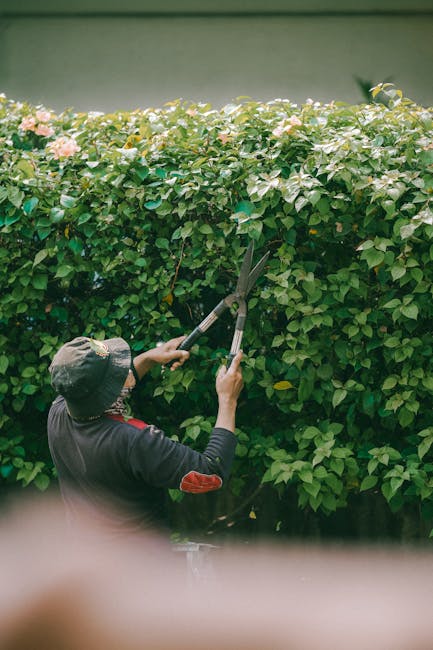
Emergency Hedge Cutting Same Day Gardeners Harmondsworth: Fast, Safe Help When Hedges Can't Wait
When a hedge suddenly becomes a problem, it never seems to happen at a convenient time. One windy night, one heavy downpour, or one burst of growth can leave you with blocked sightlines, a messy frontage, or branches leaning where they really shouldn't be. That is exactly where Emergency hedge cutting same day gardeners Harmondsworth comes in: a rapid, practical service for situations that need attention now, not next week.
This guide explains how same-day hedge cutting works, when it makes sense, what a professional gardener can do in a hurry, and how to avoid making a bad situation worse. If your hedge is causing access issues, looks unsafe after weather damage, or simply needs an urgent tidy-up before visitors arrive, you'll find clear next steps here.
To be fair, not every overgrown hedge is an emergency. But when the problem starts affecting safety, visibility, neighbours, or property presentation, urgency is real. And in Harmondsworth, where gardens can be tight, front hedges can sit close to pavements, and weather can turn a decent hedge into a unruly one very quickly, same-day help can make a genuine difference.
Table of Contents
- Why Emergency Hedge Cutting Same Day Gardeners Harmondsworth Matters
- How Emergency Hedge Cutting Same Day Gardeners Harmondsworth Works
- Key Benefits and Practical Advantages
- Who This Is For and When It Makes Sense
- Step-by-Step Guidance
- Expert Tips for Better Results
- Common Mistakes to Avoid
- Tools, Resources and Recommendations
- Law, Compliance, Standards, or Best Practice
- Options, Methods, or Comparison Table
- Case Study or Real-World Example
- Practical Checklist
- Conclusion
- Frequently Asked Questions
Why Emergency hedge cutting same day gardeners Harmondsworth Matters
Hedges do more than frame a garden. They affect light, privacy, access, safety, and how your whole property feels from the street. When a hedge gets out of hand suddenly, the issue can move from cosmetic to practical very fast. That is why urgent hedge cutting matters more than people sometimes realise.
A hedge that is too wide or too tall can block driveways, hide a gate, intrude onto a pavement, or make corners hard to see. After strong winds, you may also have broken stems, bent growth, or loose sections that need careful removal before they split further. If the hedge is near a public edge, such as a front boundary or shared path, a quick response can help reduce inconvenience and avoid complaints.
There is also the simple matter of timing. Maybe you are expecting guests. Maybe you are preparing a rental check-in. Maybe the garden has been ignored during a busy spell and now the hedge looks like it has had a small rebellion. That happens. And when it does, a same-day gardener can bring things back under control before the situation spreads to the rest of the garden.
In our experience, the people who benefit most from emergency hedge cutting are not always those with the biggest gardens. Often it is the ones with the smallest margins for error: narrow access, busy frontages, or hedges that sit awkwardly close to neighbours and footpaths. One overgrown section can create a chain reaction of annoyances. You notice it when you have to squeeze past it. Everyone notices it when it starts blocking the light.
How Emergency hedge cutting same day gardeners Harmondsworth Works
Same-day hedge cutting is usually straightforward, but the process is more considered than it may look from the outside. A good gardener will first assess the hedge type, the urgency of the job, the height and spread, and whether any parts are damaged or unstable. That assessment matters because a quick cut and a good cut are not the same thing.
Here is the usual flow:
- Initial contact and triage. The gardener identifies whether the job is truly urgent, what has happened, and whether access is safe.
- Short on-site assessment. The hedge condition, size, and any obstacles are checked. This may include fencing, driveways, patios, or public-facing areas.
- Cutting plan. The gardener decides how much can be removed without stressing the hedge or leaving it uneven.
- Safe hedge reduction and tidying. Growth is cut back, damaged branches are removed, and the hedge is shaped so it looks intentional rather than hacked at. Nobody wants the "quick fix" that looks like a lawnmower met a bush in a bad mood.
- Clear-up and disposal. Cuttings are gathered, pathways are cleared, and the area is left neat.
If the hedge has been damaged by weather, the job may involve more than trimming. Loose branches might need careful removal, and the hedge may need a lighter touch in some places so it can recover. A decent emergency service balances speed with restraint, which is especially important for evergreen hedges and established boundary planting.
Same-day work often fits alongside broader garden maintenance needs. Sometimes the hedge is the obvious problem, but once it is cut back, you notice weeds, debris, or a tired border that could use follow-up attention. That is not unusual. Gardens tend to reveal one task at a time and then three more underneath it.
Key Benefits and Practical Advantages
The obvious benefit is speed. But the real value of emergency hedge cutting is what that speed protects: safety, access, appearance, and peace of mind. A fast response can stop a small problem from turning into an awkward one.
- Restores access: Gates, paths, bins, side returns, and driveways become easier to use again.
- Improves visibility: Important for front gardens, corners, and areas near roads or shared access points.
- Reduces strain on the hedge: Professional cutting avoids rough tearing, which can happen with rushed DIY work.
- Protects relationships: A quick tidy-up can help avoid neighbour disputes over encroachment.
- Enhances presentation: Useful before property viewings, events, or rental handovers.
- Supports recovery after weather: Damaged growth is removed cleanly rather than left to split further.
There is another practical advantage people sometimes miss: confidence. Once a hedge becomes visibly overgrown, it can make the rest of the garden feel neglected, even if the lawn, patio, and borders are otherwise fine. A fast cut often resets the whole space. Suddenly the garden feels manageable again.
If the hedge has grown as part of a wider overgrown area, it may be worth pairing the work with a more complete tidy-up. The article on bringing an overgrown garden back under control is useful if the hedge is only one piece of a larger mess.
Who This Is For and When It Makes Sense
Emergency hedge cutting is not just for dramatic storm damage. It suits a fairly broad range of real-life situations, especially when time is short and the hedge is becoming difficult to ignore.
Typical situations where same-day help makes sense
- A hedge is blocking a driveway, gate, or side access.
- Branches are hanging into a path or over a boundary in a way that feels unsafe.
- Strong wind or rain has caused sudden breakage or leaning growth.
- You are preparing for guests, a sale, a tenancy change, or a family event.
- A neighbour has raised concerns about overhang or privacy intrusion.
- The hedge is hiding a sightline where cars, bikes, or children move through the area.
It also makes sense for landlords and property managers. If a hedge has become part of a presentation issue, a quick response can save a lot of back-and-forth. Same for homeowners who have been meaning to deal with it "next weekend" for three months. We have all been there, honestly.
Sometimes the real question is not "is this urgent?" but "what happens if I leave it another week?" If the answer includes poor visibility, possible damage, neighbour friction, or a garden that feels neglected, then yes, it probably makes sense to act now.
For boundary hedges near structures or fencing, it can be helpful to think beyond the trim itself. If the hedge has been rubbing against timber or masking damage, the right follow-up might involve fencing support or a broader site clean-up after the hedge work is finished.
Step-by-Step Guidance
If you are arranging emergency hedge cutting in Harmondsworth, a simple, calm approach works best. You do not need to overcomplicate it. The main aim is to give the gardener enough information to respond well and safely.
- Describe the problem clearly. Say whether the hedge is blocking access, hanging over a pavement, damaged by weather, or simply far too large for the space.
- Share the hedge location. Front garden, rear boundary, side access, or around a driveway all affect the speed and setup.
- Explain any risks. Mention loose branches, nearby glass, uneven ground, slippery surfaces, pets, children, or restricted access.
- Ask what can be done the same day. In some cases, a full reduction is possible; in others, the best same-day outcome is to make the hedge safe, tidy, and usable.
- Prepare the area. Move cars, bins, toys, and fragile pots if you can do so safely.
- Allow room for professional judgement. A gardener may choose a more conservative cut if the hedge needs recovery time.
- Check the finish. Look at line, balance, and debris clearance before the job is signed off.
A small but useful tip: take a few photos before the cut if the hedge is especially chaotic. That helps you compare the result and can also make it easier to explain the problem if you are coordinating the work remotely. Nothing fancy. Just practical.
If you want to understand the craft behind a good finish, this guide on hedge trimming techniques gives a solid sense of how thoughtful cutting differs from a blunt chop-and-go approach.
Expert Tips for Better Results
The difference between an okay emergency trim and a genuinely good one often comes down to judgement. A hedge can be cut quickly without being cut carelessly. That is the sweet spot.
- Do not overcut in one go. If a hedge has been ignored for months, a gentler reduction is usually better than taking too much off at once.
- Match the cut to the species. Some hedges bounce back easily; others dislike hard reductions. Mixed hedging can be especially tricky.
- Keep the base slightly wider than the top. This helps lower foliage receive light and reduces bare legs later on.
- Clear the cuttings promptly. Wet debris left on patios and paths gets slippery and messy very quickly.
- Think about the next growth cycle. A hedge that looks neat now may need a lighter follow-up later to hold its shape.
- Plan around weather. A dry, calm window is much better for a clean finish than a blustery afternoon. Sounds obvious, but timing matters.
One of the best habits is to treat urgent hedge cutting as the start of recovery, not the entire solution. If the hedge has been under stress, it may benefit from water during dry spells, a tidy border underneath, and a scheduled maintenance cut later. For hedges that sit in shaded or tricky areas, the right planting and spacing matter too; the article on evergreen climbers for shade offers useful related ideas for awkward garden corners.
And yes, sometimes the smartest move is simply not to rush the last 10 percent. The hedge can look brilliant after a careful emergency trim, or patchy after an aggressive one. One is a rescue. The other is a regret.
Common Mistakes to Avoid
Emergency work can tempt people into shortcuts. That is understandable. But a few common mistakes can create extra problems, and they are easy enough to avoid with a little patience.
- Cutting without checking the boundary. It is worth knowing exactly what belongs to your side before reducing a hedge that sits near a fence or shared line.
- Taking too much off the height. A sudden heavy reduction can stress the hedge and leave it looking thin for longer.
- Using blunt or unsuitable tools. Ragged cuts heal badly and look untidy.
- Ignoring hidden damage. Rotten stems, storm split branches, or leaning trunks should not be treated as ordinary trim jobs.
- Forgetting cleanup. The hedge may be neat, but if cuttings are left on a wet patio, the job is not really done.
- Trying to work around unstable access. If ladders, slopes, or broken edges are involved, safety needs to come first.
The most common DIY mistake? Chasing perfection in the wrong moment. In an emergency, the goal is a clean, safe, controlled result. Not a topiary masterpiece. Nice if you get both, of course, but let's not be unrealistic.
Tools, Resources and Recommendations
Professional hedge cutting relies on the right equipment, but it also relies on the right mindset. Speed is only helpful when the kit and process support it.
Useful tools and site resources
- Sharp hedge trimmers: For cleaner cuts and less tearing.
- Secateurs and loppers: Handy for thicker stems or awkward sections.
- Gloves and eye protection: Simple, but not optional.
- Tarpaulins or debris sheets: Helpful for faster cleanup.
- Sturdy ladders or reach tools: Only when safe and appropriate.
- Wheelbarrows or garden sacks: For moving cuttings efficiently.
For general planning, it is also useful to look at broader service pages that explain how hedge work fits into larger garden care. The main gardening services page gives a useful overview, while pricing and quotes can help you think about what affects job scope and urgency.
If weather has caused the issue, the article on protecting a garden from severe weather is a smart companion read. It helps you spot the wider knock-on effects that storms often leave behind.
For readers who like to keep up with regular upkeep rather than emergency fixes, a more structured garden maintenance plan is usually less stressful in the long run. A bit of routine care really does save a lot of panic trimming later.
Law, Compliance, Standards, or Best Practice
This topic has a few practical compliance angles, especially around safety, property boundaries, and public access. While we are not talking about heavy regulation here, sensible best practice still matters.
In the UK, hedge cutting near pavements, neighbouring boundaries, or road-facing frontage should be done with care so that access is not obstructed and debris does not create a hazard. If the hedge affects visibility for drivers, cyclists, or pedestrians, the work should be planned so the area is made safe as part of the same visit.
Good practice also means checking for nesting birds or wildlife before major hedge work. If there is any sign of active nesting, the work may need to be delayed or reduced in scope. That is just part of acting responsibly, and it is one reason experienced gardeners avoid rushing blindly into cutting.
Health and safety should not be an afterthought either. Ladders, power tools, wet paving, and awkward overgrowth can create avoidable risks. If a gardener is operating professionally, they should work with a clear safety routine and the right protective equipment. It sounds basic, because it is basic. Basic is good.
If you want to know how a provider approaches those responsibilities, the site's health and safety policy and insurance and safety information are useful trust signals. For service expectations and customer processes, it is also worth looking at the terms and conditions and complaints procedure.
And if the hedge work is part of a property handover or occupancy change, tidy presentation plus clear communication matters just as much as the cut itself. A neat boundary is not merely decorative. It helps show care.
Options, Methods, or Comparison Table
If you are weighing up what to do with an urgent hedge, it helps to compare the most common approaches. Not every situation needs the same solution.
| Approach | Best for | Pros | Limitations |
|---|---|---|---|
| Light same-day tidy | Minor overgrowth, presentation issues, quick access fixes | Fast, neat, least disruptive | May not solve deeper structural growth issues |
| Emergency reduction | Blocked access, safety concerns, sudden growth after weather | Restores space and visibility quickly | Needs careful judgement to avoid overcutting |
| Full reshaping | Established hedges needing more than a trim | Improves form and long-term structure | May take longer and need more aftercare |
| Staged recovery plan | Very large or neglected hedges | Gentler on the plant, better long-term outcome | Does not always deliver instant dramatic change |
For many Harmondsworth gardens, the best choice is not the most dramatic one. It is the one that solves the immediate issue without creating a recovery problem. If the hedge is healthy but just too big, a same-day cut is often enough. If it is stressed or overgrown for years, a staged approach may be smarter. A bit less exciting, maybe. A lot more sensible, definitely.
Case Study or Real-World Example
Imagine a front hedge in Harmondsworth after a spell of wet, windy weather. It has not collapsed, but one side is leaning, a few branches are split, and the hedge now partly hides the gate. The homeowner is expecting family to arrive later that afternoon, and the bins need moving through the side access before collection. Not ideal.
In that situation, the first step is not to "fix everything." It is to make the hedge safe, tidy, and usable. A same-day gardener would likely start by removing broken material, reducing the worst sections, and restoring the line enough for access and visibility. If the hedge has enough strength left in it, the shape can be refined without stripping it bare.
After the cut, the difference is immediate. The gate is visible again. The path feels wider. The house front looks calmer. And perhaps most importantly, the homeowner no longer has that nagging feeling that the garden is quietly winning the argument. That's usually the emotional shift people care about most.
A follow-up visit might be scheduled for a more detailed reshape once the hedge has recovered and the weather is kinder. That approach is often better than forcing a dramatic one-day transformation, especially when the hedge is part of a larger garden structure.
Practical Checklist
Use this quick checklist before booking or carrying out urgent hedge cutting:
- Identify the exact problem: safety, access, appearance, or weather damage.
- Check whether the hedge is on your boundary or shared space.
- Look for loose branches, broken stems, or leaning sections.
- Make sure paths, driveways, and work areas can be accessed safely.
- Remove cars, toys, pots, and other obstacles if possible.
- Ask whether the hedge needs a light tidy, reduction, or staged recovery.
- Consider whether nearby fencing, patios, or structures also need attention.
- Confirm how cuttings will be cleared and disposed of.
- Think about whether follow-up garden maintenance would help.
- Book sooner rather than later if the hedge is affecting safety or neighbours.
If the hedge issue is tied to broader outdoor space improvement, you may also find the site's about us page useful for understanding the team behind the service, and the contact page is the natural next step when you are ready to get help.
Conclusion
Emergency hedge cutting is one of those services you do not think about until you really need it. Then, suddenly, it feels essential. A hedge that is too large, broken by weather, or blocking access can create more disruption than people expect, especially in compact gardens or busy front-facing spaces.
The best same-day response is calm, safe, and measured. It clears the problem, protects the hedge, and leaves the garden looking like someone cared enough to do the job properly. That is the sweet spot. Not rushed. Not fussy. Just right.
If your hedge has reached that "we need this sorted today" stage, a professional gardener can turn a stressful mess into something manageable in a single visit. And once the line is clear again, the whole garden tends to breathe a little easier.
Get a free quote today and see how much you can save.
Frequently Asked Questions
What counts as an emergency hedge cutting job?
An emergency hedge cutting job usually involves a hedge that is blocking access, creating a safety issue, damaging visibility, or causing urgent presentation problems after weather or rapid growth. If it can wait comfortably, it is probably routine maintenance rather than an emergency.
Can same-day gardeners in Harmondsworth really respond quickly?
Often, yes, depending on availability, location, job size, and access. Same-day work is more realistic for urgent tidying, safety cuts, and access restoration than for major re-shaping or very large hedge reductions.
Is emergency hedge cutting safe for the hedge?
It can be, provided the cut is sensible and the hedge type is taken into account. A good gardener will avoid removing too much at once and will choose a finish that helps the hedge recover rather than stressing it unnecessarily.
How much hedge can be cut back in one visit?
That depends on the species, condition, and season. Some hedges tolerate heavier cuts better than others. If a hedge is healthy but overgrown, a more substantial reduction may be possible; if it is stressed, a lighter cut is often wiser.
What should I do before the gardener arrives?
Clear access where possible, move vehicles, and remove anything fragile or obstructive around the hedge. If you can, take a couple of photos and note any specific concerns such as loose branches or damaged fencing.
Can hedge cutting be done after storm damage?
Yes, but with care. After storm damage, the priority is usually to remove broken material, make the hedge safe, and assess whether a fuller reduction should wait until the plant is steadier.
Will the cuttings be removed too?
Usually, professional hedge cutting includes clearing and tidying the cuttings, but it is always worth confirming the exact scope before the work begins. A clean finish matters almost as much as the cut itself.
What if my hedge is on a shared boundary?
If the hedge sits on or near a shared boundary, communication matters. It is best to know which side of the hedge is being worked on and to avoid cutting beyond what is clearly yours without agreement.
Is emergency hedge cutting more expensive than a routine trim?
It can be, because same-day availability and urgency may affect planning. The final cost depends on access, hedge size, condition, disposal needs, and how much work is involved. A clear quote helps avoid surprises.
Do I need to worry about birds nesting in the hedge?
Yes, that should always be considered. If there is any sign of active nesting, hedge cutting may need to be delayed or limited. Responsible gardeners check before starting major work.
What other garden jobs are sensible to combine with hedge cutting?
Common add-ons include light garden maintenance, boundary tidy-ups, fence checks, and clearing debris from patios or paths. If the hedge has been neglected for a while, a broader tidy can make the whole space feel much better.
How do I know whether to choose a quick trim or a bigger reduction?
Think about the problem you need solved right now. If it is access or safety, a focused same-day cut may be enough. If the hedge has become too large over time, a staged reduction plan might be the better long-term answer.